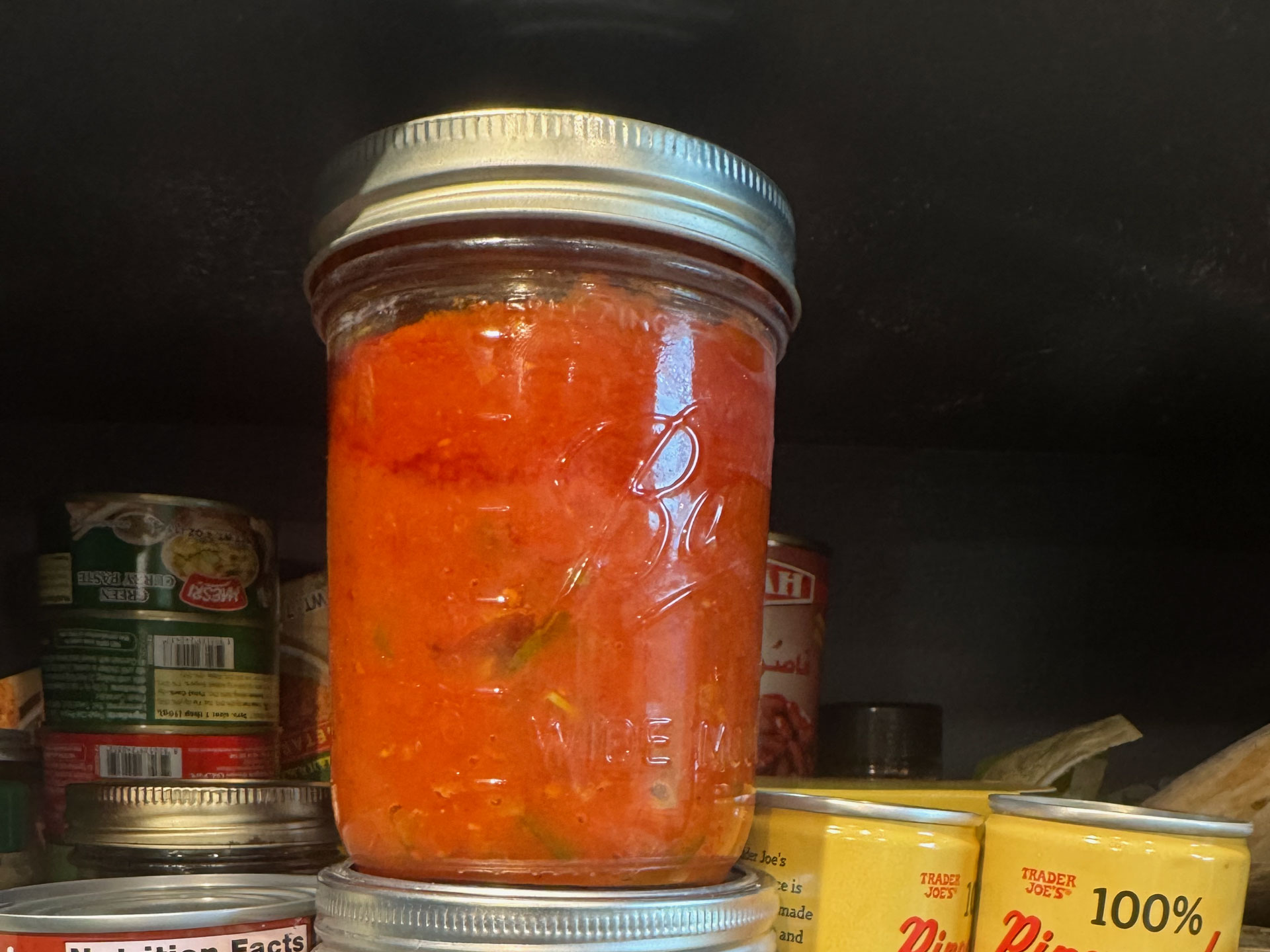
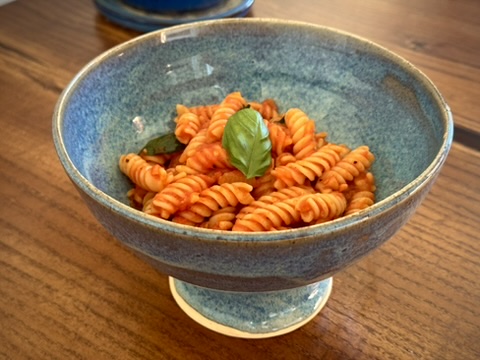
Tomato sauce is deceptively simple, and a good one should be balanced in flavor and have a creamy texture. After decades of refinement, here is my take on a red sauce perfect for pasta, lasagne, or any other place you need an exceptional tomato sauce. When learning to cook, a good red sauce has a lot of fundamental techniques packed into it. This recipe scales well, so make a large batch and pressure can it for later. Just know that canned sauce tends to mellow over time, becoming milder and more homogenous in flavor. It starts tasting closer to store-bought the longer it sits.
Tomato Sauce Ingredients
(In order of usage)
Olive Oil
Olive oil is the foundation of this sauce, acting as both a cooking medium and a flavor carrier. Its natural fats dissolve and distribute fat-soluble volatile compounds from the chilis, onions, and garlic throughout the sauce. As the tomatoes cook down, the oil emulsifies into the pulp, creating a smooth and creamy texture. A generous amount of quality olive oil is key. Too little and the sauce lacks richness.
Dried Crushed Chilis
Dried red chilis are used to gently infuse the oil with warmth rather than aggressive heat. As they sit in the warming olive oil, the capsaicin and other lipid-soluble flavor compounds dissolve into the fat, spreading evenly throughout the sauce. This creates a subtle, background heat that supports the tomatoes instead of overpowering them.
Onion
Onion forms the base of flavor in this tomato sauce while contributing to the sweetness that helps counteract acidity in the sauce. Slowly cooking the diced onion in oil breaks down its sulfur compounds and converts its natural sugars, softening its sharpness and developing a mild, rounded sweetness.
Garlic
Garlic adds a sharp, pungent backbone early on, driven by sulfur compounds like allicin. As it cooks gently in the oil with the onion, that sharpness mellows into a softer, savory sweetness. This transition gives the sauce depth without harshness and ties the aromatic base together.
White Wine
White wine is a defining element of this sauce. Added in a generous quantity and reduced almost completely, the alcohol cooks off and most of the water evaporates, concentrating what remains. The reduction leaves behind organic acids, subtle residual sugars, and aromatic compounds like esters that deepen the base of the sauce. The acidity helps lift and brighten the tomato flavor, while the slight sweetness helps soften any sharp edges from the wine or tomatoes. Once reduced, the wine integrates into the oil and aromatics, creating a more layered and balanced foundation before the tomatoes are added.
Canned San Marzano Whole Peeled Tomatoes
San Marzano tomatoes provide the backbone of the sauce, bringing natural sweet tomato flavor, balanced acidity, and a soft pulp texture. Cento is the brand I use because its quality is high, consistent, and widely available. For a fresher flavor I prefer whole peeled tomatoes that I puree myself before use rather than sitting pre-pureed in the can. As they simmer, their juices, pectin, and natural sugars emulsify the olive oil into a sauce with a glossy, creamy consistency while keeping a bright, fresh tomato flavor.
Salt
Salt seasons the sauce and brings everything forward. It makes the tomatoes taste more like tomatoes and the onions taste sweeter, making the whole thing feel more complete. Without enough, it tastes dull and less balanced. The goal is not just to season the sauce, but the pasta it gets paired with as well.
Black Pepper
Black pepper adds a secondary layer of warmth and complexity beyond the chilis. Piperine provides a different kind of heat, while subtle floral and woody compounds add depth. It reinforces the background heat without making the sauce feel spicy.
Fresh Basil
Fresh basil is added at the end to preserve its delicate aroma. It brings a bright, herbal lift with a subtle licorice-like note from estragole, its primary VOC, that sits on top of the sauce and cuts through the richness. Adding it just before pulling from heat keeps those aromatics from fully cooking off while still letting them bloom into the sauce.
San Marzano Tomato Sauce
Equipment
- Heavy-Bottomed Dutch Oven or Large Saucepan
- Blender
- Chefs Knife
- Cutting Board
- Wooden Spoon
Ingredients
- 1 Medium Onion finely diced
- 3/4 bulb Garlic coarsely minced
- 1/2 cup Extra Virgin Olive Oil
- 1/2 tsp Dried Crushed Chilis
- 1 cup White Wine
- 1 can San Marzano Whole Peeled Tomatoes 28 oz
- 1 1/2 tsp Salt adjust to taste
- 1/2 tsp Black Pepper freshly ground
- 10-14 Fresh Basil Leaves torn
Instructions
- Open the 1 can San Marzano Whole Peeled Tomatoes and puree in a blender until smooth. Set aside.
- Peel and finely dice 1 Medium Onion. Set aside.
- Break apart 3/4 bulb Garlic into individual cloves. Crush each lightly with the flat side of your knife and remove the peel. That light crush opens up the clove so when you slice through it, it falls apart into a natural coarse mince without any extra work.
- Set a large heavy-bottomed pan or dutch oven over medium heat. Once up to temperature, add the 1/2 cup Extra Virgin Olive Oil and 1/2 tsp Dried Crushed Chilis together. You should see them bubble gently.
- Add the diced onion and reduce to a low-medium flame. Cook, stirring occasionally, until softened and starting to turn translucent, around 5 minutes. You want sweetness, not color.
- Add the garlic, reduce to a low flame, and continue cooking for another 5 minutes until fragrant and fully infused into the oil. No color on the garlic.
- Increase to a high flame and pour in the 1 cup White Wine. Stir occasionally and let it boil off until all the liquid is gone, around 10 minutes. What's left is the oil, the concentrated aromatics, and the depth the wine left behind.
- Add the pureed tomatoes immediately and stir to fully incorporate. Season with 1 1/2 tsp Salt and 1/2 tsp Black Pepper. Bring to a boil, then reduce to a low simmer.
- Simmer uncovered for about 5 minutes until the oil has fully emulsified into the tomatoes. The sauce should look glossy with a smooth, cohesive texture.
- Tear 10-14 Fresh Basil Leaves and add them to the sauce about 45 seconds before pulling off the heat or adding your al dente pasta to finish cooking directly in the sauce.